
Dental Bonding in Goshen, IN
Small chips, gaps, uneven edges, and discoloration can affect how you feel about your smile. At Goshen Smiles, Dr. Deana Fugate, DMD offers dental bonding in Goshen, IN using tooth-colored composite resin to create natural-looking, conservative improvements. Bonding can often be completed in one visit with little or no removal of healthy tooth structure. We welcome patients from Goshen, Elkhart, Middlebury, Midway, Rieth Park, and surrounding communities. Call 574-533-6911 to schedule your dental bonding consultation. Request an Appointment
What Is Dental Bonding?
Dental bonding, also known as composite bonding, cosmetic bonding, or tooth bonding, uses tooth-colored resin to repair or reshape teeth. The material is matched to your natural enamel, sculpted directly onto the tooth, hardened, and polished.
What Can Composite Bonding Fix?
Dental bonding may improve:
- Small chips and worn edges
- Minor gaps between teeth
- Uneven or irregular tooth shapes
- Localized discoloration
- Mild enamel wear
- Minor cosmetic imperfections
More significant damage may require another type of chipped tooth repair.
Benefits of Dental Bonding
Dental bonding is a popular option because it is conservative, versatile, and efficient. Many treatments require little alteration of healthy enamel and can be completed during one appointment.
Composite resin is also carefully shade-matched and polished to blend naturally with surrounding teeth. If it chips or wears in the future, it may sometimes be repaired rather than completely replaced.
How Does Dental Bonding Work?
1. Evaluation
Dr. Fugate examines your tooth, gums, and bite to make sure bonding is appropriate.
2. Shade Selection
Composite resin is matched to your natural teeth. If you also want professional teeth whitening, whitening may be recommended first because composite does not whiten like natural enamel.
3. Bonding and Shaping
The tooth is prepared, and resin is applied in layers and sculpted to achieve the desired shape.
4. Curing and Polishing
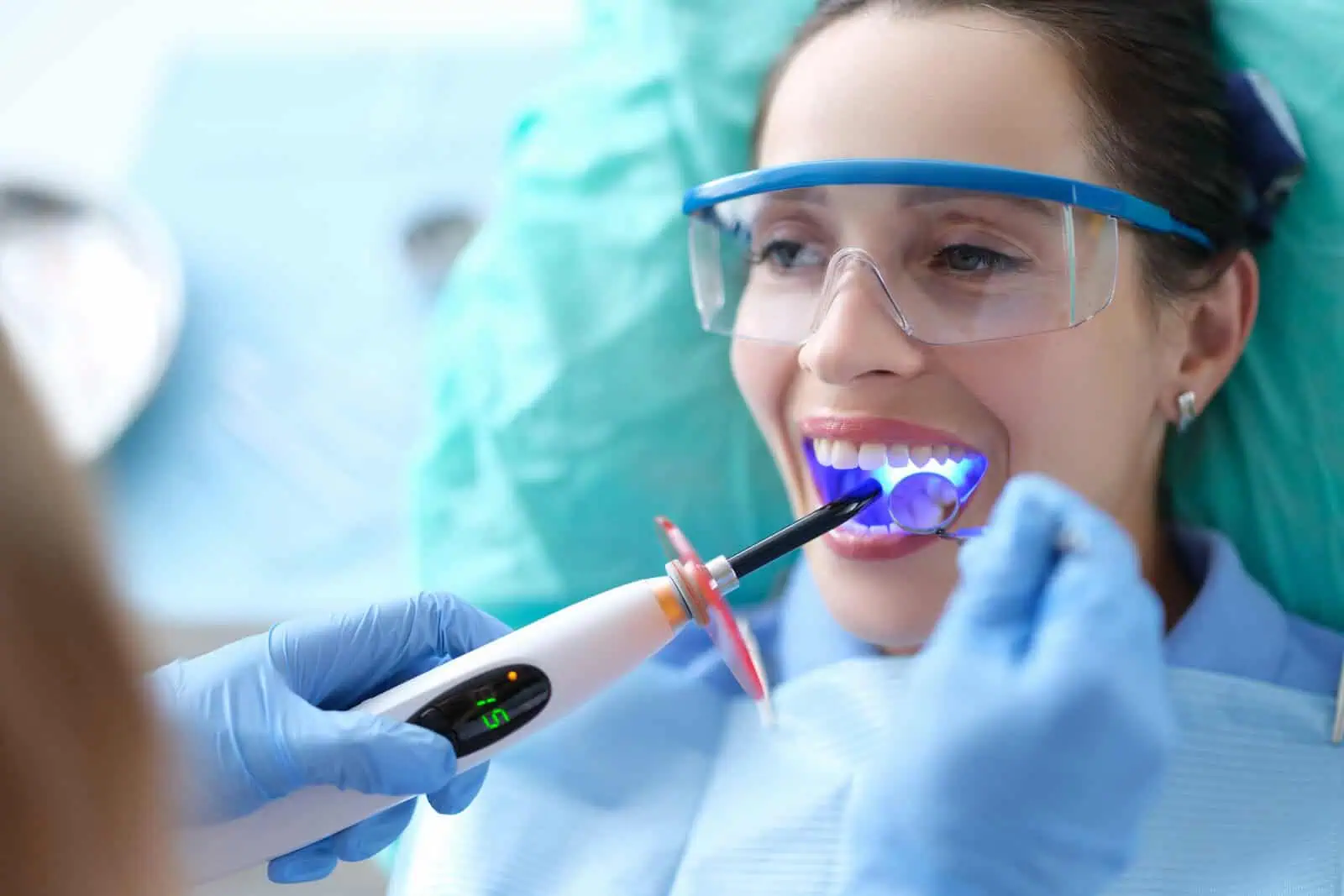
A curing light hardens the composite before the restoration is refined and polished for a smooth finish.
Who Is a Good Candidate for Dental Bonding?
Bonding may be a good choice for patients with healthy teeth and gums who want to correct small chips, gaps, uneven edges, discoloration, or minor shape concerns.
Bonding may not be appropriate for large fractures, severe decay, major bite problems, extensive tooth wear, or heavily damaged teeth. When greater structural protection is needed, a ceramic crown may be recommended instead.
Dental Bonding vs. Veneers
Dental bonding is generally best for smaller, targeted cosmetic changes. It can often be completed in one visit and usually requires less enamel alteration.
Veneers may be more suitable when several visible teeth require significant changes in color, shape, or proportion. Porcelain can also offer greater stain resistance, while composite bonding is generally easier to repair.
Dr. Fugate can help you compare both treatments based on your teeth, goals, budget, and desired longevity.
Can Dental Bonding Close Gaps?
Bonding can sometimes reduce a small gap between teeth by adding carefully shaped composite resin.
For larger spaces caused by tooth position, orthodontic treatment such as Invisalign may provide a more appropriate solution.
How Long Does Dental Bonding Last?
Dental bonding can last for years, but longevity depends on the size and location of the bonding, your bite, oral hygiene, diet, and habits such as grinding, nail biting, or chewing ice.
Composite can eventually stain, wear, or chip. Regular dental visits allow Dr. Fugate to monitor the bonding and recommend polishing or repairs when necessary.
Risks and Limitations of Dental Bonding
While dental bonding is conservative, composite resin is not as resistant to staining or fracture as some ceramic restorations.
Bonding can:
- Chip or wear over time
- Develop surface stains
- Require occasional polishing
- Need future repair or replacement
Avoid using bonded teeth to chew ice, bite hard objects, or open packaging. Patients who grind or clench their teeth should also discuss protective options with Dr. Fugate.
How Much Does Dental Bonding Cost in Goshen, IN?
Dental bonding costs vary based on the number of teeth treated, size of the repair, amount of composite needed, and treatment complexity.
Insurance coverage can also vary depending on whether bonding is cosmetic or restorative. Goshen Smiles offers CareCredit and Cherry Financing for eligible patients. Learn more about our financing and insurance options.
A personalized estimate can be provided after your dental evaluation.
Why Choose Goshen Smiles for Dental Bonding?
Dr. Deana Fugate has practiced dentistry since 2003 and completed an Advanced Education in General Dentistry residency in 2004. She also served as a U.S. Navy Dental Officer, including a seven-month deployment to Iraq.
Her approach at Goshen Smiles emphasizes preventive, personalized, and non-judgmental dentistry while preserving healthy tooth structure whenever appropriate.
Learn more about her experience and philosophy when you meet Dr. Deana Fugate.
Goshen Smiles is a female- and veteran-owned practice offering family-focused dental care in English and Spanish.
Dental Bonding Near Elkhart and Middlebury, IN
Goshen Smiles is conveniently located at 1213 W Lincoln Ave, Goshen, IN 46526. We welcome dental bonding patients from Goshen, Elkhart, Middlebury, Midway, Rieth Park, and surrounding northern Indiana communities within approximately 25 miles.
If a chipped, uneven, discolored, or irregularly shaped tooth is affecting your smile, Dr. Fugate can determine whether composite bonding is right for you.
Call 574-533-6911 to schedule your consultation.
Frequently Asked Questions About Dental Bonding
Is Dental Bonding Painful?
Dental bonding is typically comfortable and often requires little alteration of natural enamel. Many cosmetic bonding procedures do not require anesthesia, although it may be recommended when decay, sensitivity, or deeper tooth damage is involved.
Does Dental Bonding Damage Your Teeth?
Bonding is considered a conservative treatment and often requires little or no removal of healthy enamel. The amount of preparation depends on the tooth and the correction being performed.
Can Dental Bonding Fix a Chipped Tooth?
Yes. Bonding is commonly used for small chips. Tooth-colored composite can restore the missing area and natural contour. Larger fractures should be evaluated to determine whether the tooth requires a stronger restoration.
Can Dental Bonding Close Gaps?
Bonding can close certain small spaces by adding composite to neighboring teeth. Larger gaps or spacing caused by tooth position may be better treated orthodontically.
Does Composite Bonding Stain?
Composite resin can develop stains over time, particularly from coffee, tea, tobacco, and other strongly pigmented substances. Good oral hygiene and regular professional care can help maintain its appearance.
Can You Have Composite Bonding on Crowns?
Sometimes, but bonding to a crown differs from bonding to natural enamel. Suitability depends on the crown material, damage, and bite forces. In some cases, replacing the crown may provide a more predictable result.
Is Dental Bonding Better Than Veneers?
Neither treatment is better for everyone. Bonding is generally more conservative and suited to smaller corrections, while veneers can provide more extensive cosmetic changes. Your dentist can recommend an option based on your teeth, goals, and desired longevity.
Most patients benefit from visiting the dentist every six months. However, patients with certain conditions, such as gum disease, may need more frequent visits.
Restore Your Smile with Subtle, Affordable Treatment
Dental bonding can provide a simple, natural-looking solution for appropriately selected chips, gaps, uneven teeth, and other minor imperfections. Goshen Smiles 1213 W Lincoln Ave, Goshen, IN 46526 574-533-6911 Serving Goshen, Elkhart, Middlebury, Midway, Rieth Park, and nearby communities. Schedule Your Dental Bonding Consultation